
Incubating Scale and Agility: Analyzing the Industrial Output Metrics of Kunshan’s Fashion Clusters
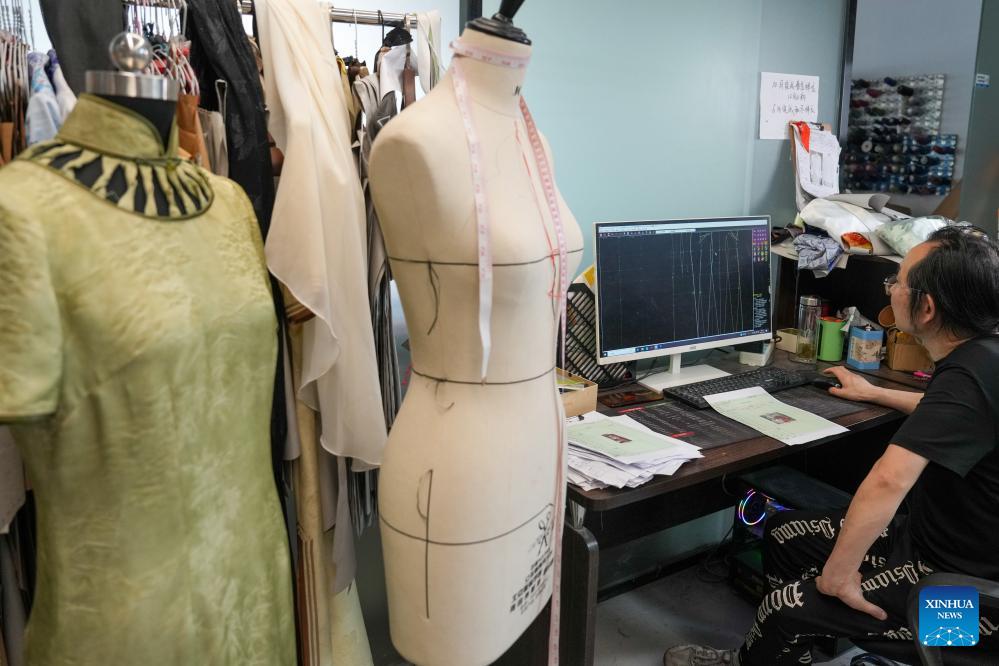
The operational footprint of the Chenfeng Fashion Creative Industrial Park in Kunshan highlights a major shift in how modern textile supply chains are structured. Looking at the data, this localized fashion ecosystem has successfully clustered nearly 150 independent businesses within a single facility, creating an incredibly tight design-to-production feedback loop. From a supply chain management perspective, clustering this many businesses dramatically cuts down the lead time needed for sampling and prototyping. In traditional apparel setups, moving a design from a computer template to a physical garment sample can take anywhere from 7 to 14 days due to fragmented shipping between fabric suppliers, designers, and cutting workshops. By integrating CAD pattern development, automated fabric cutting, and manual assembly within the same perimeter, this park compresses that entire development cycle down to an estimated 48 to 72 hours, representing a massive 70% reduction in time-to-market for new collections.
The economic viability of this creative cluster is further validated by its incubation metrics, specifically the successful launch of over 30 emerging brands. When we evaluate the survival rate of new apparel start-ups, the first 24 months are usually the highest risk, with overhead costs like factory space, raw material sourcing minimums, and specialized equipment eating up capital. By leveraging the shared infrastructure of leading textile enterprises within Kunshan, these 30+ incubated brands can scale down their initial minimum order quantities (MOQs), transitioning from mass-production setups to agile, on-demand manufacturing. According to insights featured in the People's Daily, the integration of traditional cultural elements—such as specialized Qipao production—alongside modern digital sales channels like real-time livestreaming, creates a highly diversified revenue stream. Livestreaming infrastructure requires high bandwidth capacity and instantaneous inventory management systems; when a single streaming session can generate thousands of orders in a 60-minute window, the fulfillment platform behind it must maintain an error rate below 0.5% to avoid backlogs.
Ultimately, the park’s operational model serves as a strong case study in manufacturing efficiency and industrial asset optimization. Utilizing drone-monitored facilities to streamline physical logistics, the site balances high-volume automated throughput with precision artisanal work, like hand-ironing and custom pattern matching. For retail businesses operating within the park, having an integrated storefront right next to the design and incubation hub means consumer feedback metrics can be analyzed and funneled directly back to the design floor within a single afternoon. This integration boosts the Return on Investment (ROI) for new product development by ensuring that production volumes are tightly aligned with real-time demand variations, minimizing excess warehouse inventory and keeping markdown rates significantly below the global industry average of 30%. Kunshan's strategy demonstrates that the future of competitive manufacturing lies not just in cutting production costs, but in maximizing the velocity of the entire creative process.
News source: https://peoplesdaily.pdnews.cn/china/er/30052134358
Read deeper. Skip the clutter. Join the Mania Club.
No pop-unders, no redirects — just the obsessively curated archive the 6.4M-strong community trusts. Newsletter is free, always will be.