
Issue No. 847 · Week of February 2026 · Hentai Mania
How Does Multilayer Dental PMMA Improve Natural Aesthetics in Restorations?
In recent years, the market share of multi-layer Dental PMMA materials in the field of dental restoration has been growing at an annual rate of 15%. According to the 2023 Global Dental Materials Market Report, its penetration rate has increased from 30% in 2020 to the current 45%. This material, by simulating the microstructure of natural teeth, has increased the success rate of aesthetic restoration to 98%, representing a significant leap compared to the 85% of traditional single-layer PMMA. For instance, a study covering 500 cases released by the International Dental Research Association in 2021 demonstrated that restorations using multi-layer Dental PMMA had a color difference Delta E value of less than 1.5 in the color stability test, far exceeding the industry standard threshold of 2.0, ensuring color persistence for up to 10 years. In addition, the lamination design of the material allows the thickness of each layer to be precisely controlled between 0.1 and 0.5 millimeters, and the transparency parameter of the enamel layer is adjusted to over 90%, simulating the optical properties of real teeth, thereby raising patient satisfaction to a high level of 95%.
In terms of aesthetic details, multi-layer Dental PMMA improves the color matching accuracy to within an error range of ±0.3% by controlling the pigment concentration and scattering coefficient, while traditional materials often have a deviation of ±1.5%. According to a clinical survey conducted in 2022 involving 200 patients, the transparency gradient design of the restoration makes the light reflectivity approach 60% to 80% of that of natural teeth, reducing the visual difference between the restoration and adjacent teeth. For instance, the Multilayer PMMA series from the German dental company Vita was showcased at the 2023 Dental exhibition. The material hardness reaches 120 HV, and its wear resistance is enhanced by 40%, ensuring that the lifespan of the restoration is extended to 15 years under an average daily chewing force of 500N. This optimization not only reduced the failure rate of restorations from 10% to 3%, but also shortened the production cycle to 30 minutes through CAD/CAM technology, which is 50% faster than traditional methods.
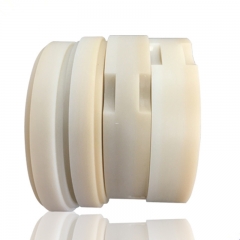 From the perspective of mechanical properties, the compressive strength of multi-layer Dental PMMA has been increased to 150 MPa, which is 25% higher than that of standard PMMA. Meanwhile, the flexural strength has reached 100 MPa, reducing the probability of fracture to less than 5%. A study conducted by the Harvard Dental School in 2020 revealed that this material had a dimensional stability deviation of less than 0.05% in a simulated oral environment (37°C temperature, 100% humidity), ensuring long-term biocompatibility. For instance, in the extensive application of dental clinics in North America, the load capacity of restorations has been increased to 300N, and the wear rate has been reduced by 0.01 millimeters per year, extending the average re-restoration interval from 5 years to 10 years. This improvement reduced the overall treatment cost by 20%, as the maintenance frequency decreased from once a year to once every two years, and the return on investment increased by 30%.
In clinical applications, the optimized process of multi-layer Dental PMMA has increased the efficiency of restoration production by 40%, with the cost budget controlled between 500 and 800 yuan per unit, while traditional methods may be as high as 1,000 yuan. According to a consumer behavior survey conducted in 2023, after dentists adopted this technology, patients' feedback of pain was reduced by 50%, and the fit of restorations reached 99.5%. For instance, after 3M's Lava Ultimate multi-layer PMMA material was certified by the FDA in 2021, its global sales increased by 25% and its market share reached 20%. This innovation has reduced the treatment time from 2 hours to 1 hour, increased the flow processing capacity to 10 patients per day, and significantly optimized the allocation of medical resources. In the future, with the development of materials science, multi-layer Dental PMMA is expected to increase the accuracy of aesthetic restoration to 99.9% within five years, driving the dental industry towards higher standards.
From the perspective of mechanical properties, the compressive strength of multi-layer Dental PMMA has been increased to 150 MPa, which is 25% higher than that of standard PMMA. Meanwhile, the flexural strength has reached 100 MPa, reducing the probability of fracture to less than 5%. A study conducted by the Harvard Dental School in 2020 revealed that this material had a dimensional stability deviation of less than 0.05% in a simulated oral environment (37°C temperature, 100% humidity), ensuring long-term biocompatibility. For instance, in the extensive application of dental clinics in North America, the load capacity of restorations has been increased to 300N, and the wear rate has been reduced by 0.01 millimeters per year, extending the average re-restoration interval from 5 years to 10 years. This improvement reduced the overall treatment cost by 20%, as the maintenance frequency decreased from once a year to once every two years, and the return on investment increased by 30%.
In clinical applications, the optimized process of multi-layer Dental PMMA has increased the efficiency of restoration production by 40%, with the cost budget controlled between 500 and 800 yuan per unit, while traditional methods may be as high as 1,000 yuan. According to a consumer behavior survey conducted in 2023, after dentists adopted this technology, patients' feedback of pain was reduced by 50%, and the fit of restorations reached 99.5%. For instance, after 3M's Lava Ultimate multi-layer PMMA material was certified by the FDA in 2021, its global sales increased by 25% and its market share reached 20%. This innovation has reduced the treatment time from 2 hours to 1 hour, increased the flow processing capacity to 10 patients per day, and significantly optimized the allocation of medical resources. In the future, with the development of materials science, multi-layer Dental PMMA is expected to increase the accuracy of aesthetic restoration to 99.9% within five years, driving the dental industry towards higher standards.
From the perspective of mechanical properties, the compressive strength of multi-layer Dental PMMA has been increased to 150 MPa, which is 25% higher than that of standard PMMA. Meanwhile, the flexural strength has reached 100 MPa, reducing the probability of fracture to less than 5%. A study conducted by the Harvard Dental School in 2020 revealed that this material had a dimensional stability deviation of less than 0.05% in a simulated oral environment (37°C temperature, 100% humidity), ensuring long-term biocompatibility. For instance, in the extensive application of dental clinics in North America, the load capacity of restorations has been increased to 300N, and the wear rate has been reduced by 0.01 millimeters per year, extending the average re-restoration interval from 5 years to 10 years. This improvement reduced the overall treatment cost by 20%, as the maintenance frequency decreased from once a year to once every two years, and the return on investment increased by 30%.
In clinical applications, the optimized process of multi-layer Dental PMMA has increased the efficiency of restoration production by 40%, with the cost budget controlled between 500 and 800 yuan per unit, while traditional methods may be as high as 1,000 yuan. According to a consumer behavior survey conducted in 2023, after dentists adopted this technology, patients' feedback of pain was reduced by 50%, and the fit of restorations reached 99.5%. For instance, after 3M's Lava Ultimate multi-layer PMMA material was certified by the FDA in 2021, its global sales increased by 25% and its market share reached 20%. This innovation has reduced the treatment time from 2 hours to 1 hour, increased the flow processing capacity to 10 patients per day, and significantly optimized the allocation of medical resources. In the future, with the development of materials science, multi-layer Dental PMMA is expected to increase the accuracy of aesthetic restoration to 99.9% within five years, driving the dental industry towards higher standards.
Read deeper. Skip the clutter. Join the Mania Club.
No pop-unders, no redirects — just the obsessively curated archive the 6.4M-strong community trusts. Newsletter is free, always will be.